%20(1)%201.png)
Conferences, webinars and journal club
Conferences

Caroline Duchaine - FSG Conference
Quand l’air devient vecteur : comprendre les bioaérosols
Faculté des sciences et de génie, 20 novembre 2025
Bioaerosols are everywhere. In fact, it's almost impossible to name a situation where they aren't present! But what impact do these biological particles, floating and dispersing in the air, have on our lives? Our health? Agricultural production? The climate?
For several decades, bioaerosols have been studied, whether to understand epidemics, plant and animal diseases, or their use as agents of bioterrorism. This presentation aims to provide an overview of the history of airborne diseases, the various challenges related to controlling bioaerosols in human and animal environments, and will also offer several examples of situations where research attempts to understand the behavior of microorganisms in the air and their impacts. From gastroenteritis to tuberculosis, including COVID-19 and farmer's lung, and even in the study of cloud formation, air can represent a major challenge because particles are invisible and can travel very long distances.

Caroline Duchaine - EDAR 7
Bioaerosols and Antibiotic Resistance Gene Transport: Understanding the Role, Impacts, and Fate
EDAR 7 - May 26-31 2024, Montréal, Québec
Caroline Duchaine is a full professor in the Department de biochemistry, microbiology et bioinformatics at Université Laval and holds the Canada Research Chair (Tier 1) in Bioaerosols. Her work focuses on the study of bioaerosols in a variety of contexts: human, animal and industrial health, as well as on the development of analytical strategies for both natural and in vitro environments. She has co-authored over 660 abstracts, research papers, reports and book chapters. She has conducted 135 funded research projects and participated in the training of 150 graduate students. She has won several awards, both for her research and her teaching. Her research is transdisciplinary and involves collaboration with various experts, including physicists, medical doctors, veterinarians, engineers and bioinformaticians.

Lecture by Florent Rossi
(In French) Postdoctoral fellow at the Département de biochimie, de microbiologie et de bio-informatique et du Centre de recherche de l'Institut de cardiologie et pneumologie de Québec
Tuesday, June 6 at 10:00 a.m.
Vachon Building, room 1168-COPL
For the first time, we were able to identify significant concentrations of ARGs in cloud and aerosol samples collected at a mid-altitude site (the Puy de Dôme, 1465 m a.s.l.), attesting to the distant provenance of these genes. The observed high prevalence of genes involved in efflux pumps could suggest an important contribution of intrinsic global stress response mechanisms from environmental sources (notably the Atlantic Ocean), possibly favored by the conditions encountered during atmospheric transit (desiccation, oxidative stress, UV). For the time being, many questions remain unanswered, particularly with regard to the sources of emissions and the fate of these genes, but our results tend to highlight the key role played by the atmosphere in the acquisition and dispersal of antibiotic resistance genes in the environment.

Caroline Duchaine - Colloque RDT
(In French) Colloque RDT - Filière porcine 2022
Présentation de Caroline Duchaine, Ph.D., Université Laval, dans le cadre du Colloque RDT - Filière porcine 2022.
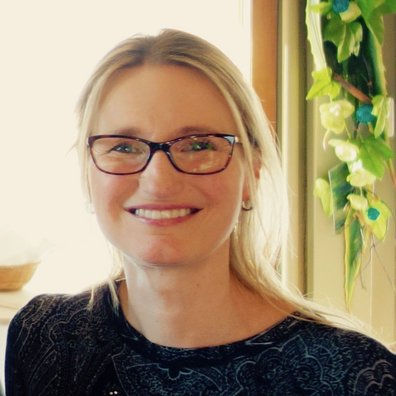
Nathalie Turgeon
(In French) Capacité de filtration, test d’ajustement et confort des utilisateurs de masques N95 décontaminés : l’expérience de l’IUCPQ durant la pandémie de la COVID-19
This lecture will examine the effect of two different hydrogen peroxide treatments on the filtering capabilities and fit quality of two N95 mask designs. The discomfort experienced by volunteers after wearing the treated RPAs and the challenges of large-scale implementation will also be discussed.


13- ARG in bioaerosols
Christian Landry


Webinars


Students presentations


Jimmy Dikeakos
Comments on « Reverse-transcribed SARS-CoV-2 RNA can integrate into the genome of cultured human cells and can be expressed in patient-derived tissues »
Professor Dikeakos comments the article published in PNAS : « Reverse-transcribed SARS-CoV-2 RNA can integrate into the genome of cultured human cells and can be expressed in patient-derived tissues ».